
Key Takeaways
- Wikipedia is one of the most influential sources for AI search, making it a valuable tool for improving your brand’s online visibility.
- Before creating a Wikipedia page, your business must meet Wikipedia’s notability requirements with significant coverage from reliable, independent sources.
- Following Wikipedia’s guidelines, including disclosing conflicts of interest, using neutral language, and citing trustworthy sources, can improve your chances of approval.
- Wikipedia pages are maintained by the community, so keeping your information accurate and up to date is an ongoing responsibility.
- A well-maintained Wikipedia page can strengthen your credibility and increase the likelihood that your business appears in AI-generated answers and search results.
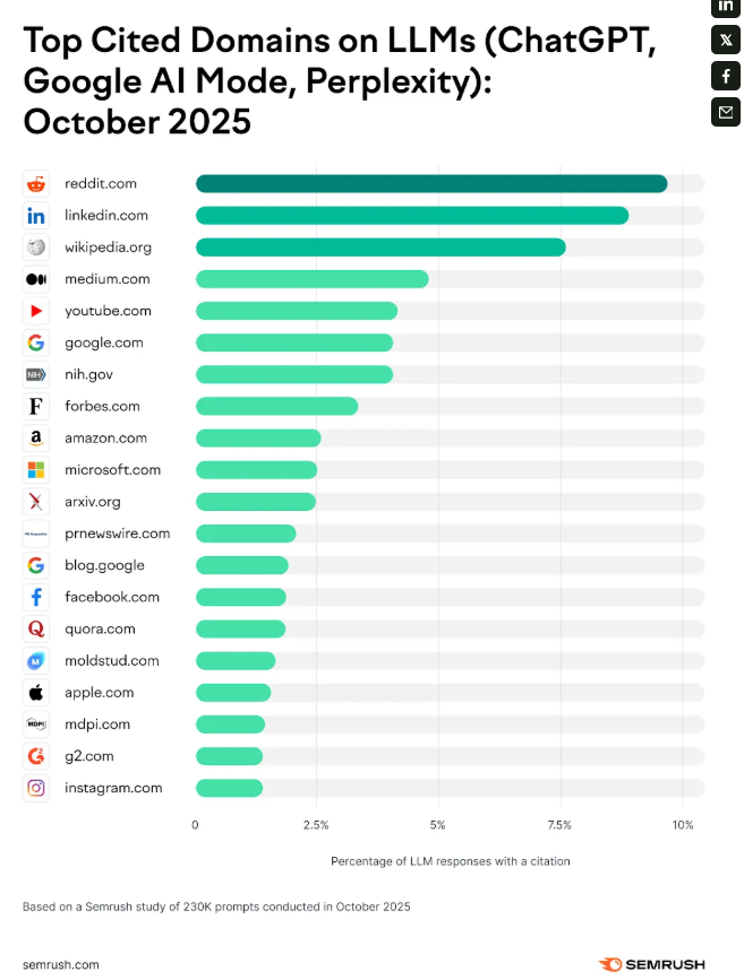
You would think Wikipedia’s glory days were behind it, but today it has become one of the best ways to get your brand noticed by AI. Wikipedia is the third most cited domain across AI platforms like ChatGPT, Google AI Mode, and Perplexity, making it one of the most valuable places to have your business represented.
If your business doesn’t have a Wikipedia page yet, you could be missing out on a key opportunity to reach your target audience where they are already looking. This guide explains why Wikipedia is important for AI search, how to see if your business qualifies, steps to create your page, and how to handle common reasons for rejection.
Why Wikipedia Matters for AI Search Visibility
Unlike a company website, which AI treats as a biased source, Wikipedia is seen as a third-party reference. That means if your business has a Wikipedia page, you are more likely to show up in AI-generated answers, summaries, and recommendations, even when someone is not specifically searching for you. Having a presence on Wikipedia today is no longer just about credibility. It is about being part of the conversation AI is having with your potential customers.
Having a well-sourced Wikipedia page helps shape how AI systems see and describe your brand. This is part of a growing practice called Answer Engine Optimization (AEO), which is all about making sure your business shows up as the answer when potential customers ask AI a question.
Does Your Business Qualify for Wikipedia?
Before you create a Wikipedia page, make sure your business meets Wikipedia’s notability requirements. Notability is Wikipedia’s way of determining whether a business has received enough independent recognition to deserve its own page. If your business doesn’t meet these requirements, your page will likely be rejected or deleted.
Once that happens, getting a page approved later can be more difficult because you’ll need stronger evidence of notability than before. The next section explains what Wikipedia looks for when evaluating whether a business qualifies.
What Makes a Business Notable Enough?
A business is generally considered notable if it has received significant coverage in reliable, independent sources. Here’s what those requirements mean:
Significant Coverage: This refers to in-depth articles or analyses about your company. Passing mentions, short blurbs, or directory listings don’t count. The coverage needs to provide substantial information, not just name-drop your company.
Reliable Sources: These are publications with established reputations for fact-checking and editorial oversight, like newspapers, respected industry journals, and academic publications. Wikipedia does not consider social media posts, personal blogs, or self-published content to be reliable.
Independent Sources: These must come from outlets that are not directly connected to your company. Company blogs, press releases, and marketing materials do not qualify. Even articles where a journalist interviews your CEO or republishes your press release are not considered independent.
How to Create a Wikipedia Page for Your Business
Create a Wikipedia Account
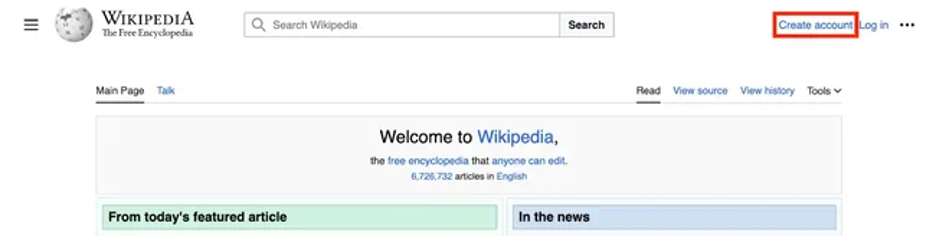
Creating a Wikipedia account is free, and anyone can do it. Go to Wikipedia’s homepage and click “Create account” in the top right. Enter the necessary information, including username and password, then click “Create your account”.
While you can technically edit Wikipedia anonymously, having an account adds credibility and is required for creating new pages.
Get Promoted to an Auto-Confirmed User
When you join Wikipedia, you will see a box pop up that reads ‘Help Improve Wikipedia.’ Before creating your page, you will need to become an autoconfirmed user. To become autoconfirmed, your account has to be more than 4 days old and have made at least 10 edits. Spend the first couple of days after opening your account editing other pages. Once you are autoconfirmed, proceed to the next step.

Declare Your Conflict of Interest (COI)
If you are creating or editing a Wikipedia page for your own business or a client’s business, Wikipedia considers this a conflict of interest (COI) because you have a direct connection to the organization. This doesn’t mean you can’t contribute, but Wikipedia encourages editors to be transparent about their relationship.
One way to do this is by creating a User Page, where you briefly introduce yourself and disclose your connection to the business. Being open about your role helps build trust with other editors and shows that you are following Wikipedia’s editing guidelines.
Draft Your Article in the User Sandbox
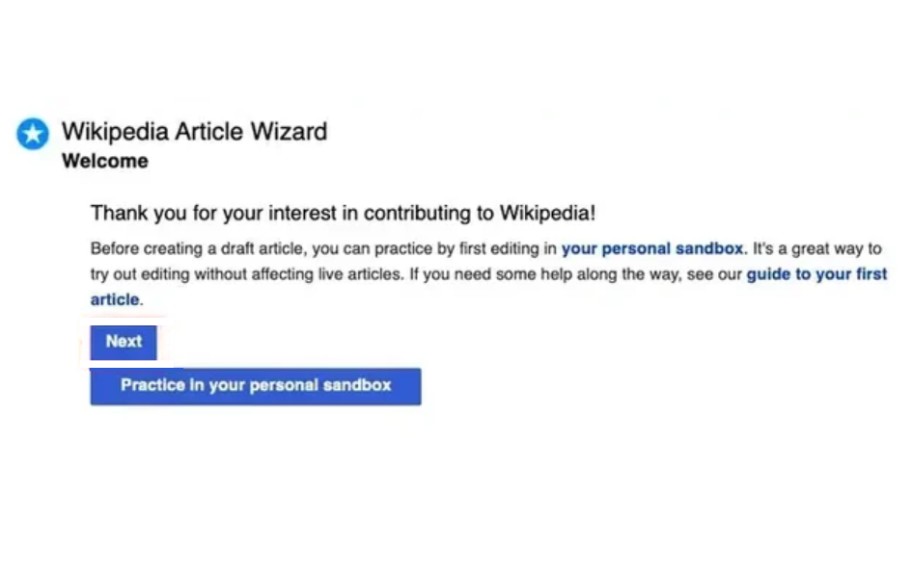
Instead of publishing your article right away, use your account’s ‘sandbox’ to draft it first. The sandbox is a space where you can practice and finish your Wikipedia article before making it public. You can find this option in the Wikipedia Article Wizard.
 Provide Citations
Every claim on your Wikipedia page must be supported by citations from reliable, third-party sources. This is one of Wikipedia’s core requirements. When searching for sources, consider magazine or newspaper articles that mention your business, websites that list you as a resource, or directories that link to your company profile. Social media, press releases, and corporate or professional profiles are not accepted. The more solid your citations, the more likely your page will pass editorial review.
Maintain a Neutral Point of View
Even when you are trying to be objective, it is easy to subconsciously add information that reads as promotional. Before your page goes live, read through everything you have written as if you are a complete stranger to the business. If anything sounds salesy or like it is taking shots at competitors, remove it.
If you are unsure, include citations from sources that aren’t connected to your company. Linking to news stories, reliable industry databases, or other Wikipedia pages makes your content seem more balanced and less like an ad. As a final check, review Wikipedia’s Conflict of Interest Guidelines one more time to make sure you have covered all your bases.
Submit the Page for Review
Once you are done writing your page, submit it for review. If it meets Wikipedia’s guidelines, it will be published as an official Wikipedia page. Before submitting, it helps to review the Article Wizard’s Common Mistakes page.
Most pages get rejected for the following reasons:
- Using promotional language instead of neutral, objective writing
- Copy-pasting content instead of submitting original writing
- Not including enough citations to establish credibility
Update It Regularly
Getting your page published is just the first step. As your Wikipedia page starts ranking on Google for your company name, you will want to keep it up to date with the latest information about your business. If significant, well-documented developments occur and are covered by reliable independent sources, they can be reflected on the page. Keeping it current also shows transparency, which goes a long way with both existing customers and potential ones.
Common Rejection Reasons and How to Fix Them
When you submit your Wikipedia page for review, it may come back with feedback requesting changes. This is completely normal and part of the process. Wikipedia has complex policies and reviewers are thorough, so most first submissions need some revision before they are accepted.
Try not to see the feedback as a setback. Reviewers are essentially giving you a specific list of what needs to be fixed to meet Wikipedia’s standards. The more you understand their feedback, the better your chances of getting your page approved.
Here are some common rejection reasons and their solutions:
Lacks Significant Coverage (Notability)
Problem: Your sources are not strong enough to establish notability.
Solution: Find better sources, truly independent and in-depth coverage from reputable publications. If that kind of coverage does not exist yet, the topic is not notable yet.
Reads Like an Advertisement
Problem: The tone is promotional.
Solution: Remove any marketing language. For example, do not use words like “innovative,” “leading,” or “best-in-class.” Instead, use clear and factual statements and support them with citations.
The Reliability of Sources Is Questionable
Problem: Some of your citations are not independent or reliable. For example, press releases, sponsored content, and blogs do not meet strong sourcing standards.
Solution: Remove any weak sources. Instead, support your claims with citations from reputable newspapers, academic journals, books, or respected industry publications.
Copyright Violations
Problem: Your draft contains copyrighted material.
Solution: Rewrite the content. Summarize the source instead of reprinting it word-for-word. Paraphrase instead of copying large blocks of text.
Frequently Asked Questions (FAQs)
Can I pay someone to create our Wikipedia page?
Yes, you can hire a professional or agency, but proceed with caution. Wikipedia requires paid contributors to disclose their relationship publicly on their user page and in edit summaries or Talk page discussions. Avoid any individual or agency that “guarantees” your page will be approved or claims to have a secret way to bypass the rules.
How long does Wikipedia approval take?
The timeline varies widely. The “Articles for Creation” (AfC) process is managed by unpaid volunteers and does not guarantee response times. The backlog can range from weeks to several months. More often than not, a draft is rejected, revised, and resubmitted multiple times. Expect the entire process from research to final publication to take 3 to 9 months.
What happens if my Wikipedia page gets rejected more than once?
If your Wikipedia page draft is rejected repeatedly, it is usually declined, not permanently banned. Submitting the same text without fixing issues will likely lead to permanent deletion. Reviewers leave specific feedback, and ignoring these notes will eventually cause the draft to be removed from the system.
Can someone change the information on my page?
Yes. Anyone can edit a Wikipedia page, but changes are reviewed by the community and can be reverted if they don’t follow Wikipedia’s guidelines.
What if someone adds negative information to my page?
You cannot remove well-sourced negative information simply because it is unflattering. This would violate the Neutral Point of View (NPOV) policy. If the information is inaccurate or relies on a low-quality source, you can address it by starting a discussion on the article’s Talk page and providing high-quality, independent sources that contradict or correct the information. Do not engage in an edit war by repeatedly deleting the content.
Improve Your AI Search Visibility With a Wikipedia Page
Getting a Wikipedia page for your business is not something that happens overnight, but it is absolutely worth the effort. With AI search changing the way people discover brands, having a well-sourced Wikipedia page puts you in a strong position to show up in the conversations AI is having with your potential customers. Take your time, follow the guidelines, and treat it as a long-term investment in your brand’s credibility and visibility.
If you are looking to improve your AI search visibility, we are here to help. Contact us today to get started.
About IN2communications
IN2communications is a Managed Marketing Agency specializing in full-funnel marketing strategies, including website development, content creation, lead generation, and ROI analytics.